2023—24 · Shenzhen Economic Daily
Fitness Studio Founder in Shenshan
Mini-doc · Entrepreneurship

Shenzhen newsrooms 2022–2024, then Lund.
 Education
 Work
Work
 Work
Work
Every story sits inside an infrastructure. I read both.
Never fully inside. That's the clearest view.
Grand narratives don't have faces. People do.
Every era has its machine. I want to understand ours.
Work made for Shenzhen Economic Daily and Shenzhen News Network between 2022 and 2024, with one earlier documentary from 2019.


Transnational families and couples formed across racial lines, and what it takes for them to be seen. Visibility is not a reward for quality; it is allocated, and the terms are rarely stated.
Couples and households formed across national and racial lines, and what public life asks of them.
Race and gender don't just appear in content. They are built into the architecture that distributes it.
Creators don't just perform for viewers. They perform for, and against, the platform itself.
Why some couples go viral and others disappear, and what that tells us about race, borders and belonging. Built from a study of African-Chinese family accounts on Douyin, where reach followed how a household arranged itself on camera rather than how well the video was made.
Outrage has an architecture. So does approval. Platforms that once rewarded conflict are learning to reward warmth, and the shift changes who is able to be seen at all.
Three interests — who gets seen, how difference is valued, and how creators navigate infrastructure — converge in one question: what does it mean to be intimate in public, when someone else sets the terms of being seen?
A small dog walks along the bottom of your screen; its journey is your working hour. No timers, no pop-ups.
I built it to see whether a health habit could be carried by a character rather than a notification, and to find out what it takes to ship a small native app end to end.

What I study are couples and households formed across national and racial lines: how such a family becomes publicly visible, and on what terms it is accepted once it is. The question belongs to migration and family research as much as to media. I come at it from the media side, because that is where these families are currently doing their appearing.
In my master's thesis on African-Chinese family accounts on Douyin, reach tracked the household's arrangement on camera: who stood in front, how the work was divided, how warmth was performed. Material outside a narrow repertoire did not travel. I called the pattern conditional acceptance, acceptance granted and withdrawn the moment its conditions stop being met.
I use an intersectional approach. Race, gender, nationality and sexuality act on each other rather than as separate variables, and together they shape what a platform lets through.
In Douyin's Utopian Brides (NCA 2025) I looked at Chinese women in transnational marriages, and at how costume, camera position and voiceover language reproduce Orientalist framing far more often than they trouble it. The "ideal interracial marriage" is a racialised commodity, shaped by what audiences expect and what the algorithm pays for.
These two studies are one design rather than two topics. The genre and the coding scheme stay fixed; what varies is the racial configuration of the couple, Chinese women with Western men in one and Chinese men with African women in the other. Read side by side, they show the same audience valuing two intimacies very differently.
On short-video platforms, creators perform for the recommendation system as much as for the audience. That infrastructure rewards some kinds of intimacy and quietly penalises others.
In my master's thesis I proposed relational configuration as a unit of analysis: how roles, space, labour and interaction rhythm settle into recognisable patterns in these videos. The patterns are not free creative choices. They are what the platform has already paid for.
Migrant creators negotiate twice over: once with an audience carrying racial and cultural expectations, and once with a system that may amplify or bury them for reasons they never get to see.
The Politics of Intimate Visibility is the theoretical framework I am developing. It operates on three levels.
Representation: Race is not a biological fact but a meaning system constructed through media practice. How a couple is filmed, narrated and cut does not reflect racial meaning so much as make it.
Intersectionality: No single axis explains visibility differentials across couple types. A Chinese woman with a white husband occupies a different visibility position than a Chinese man with a Black woman, because race, gender, nationality and sexuality act on one another.
Platform architecture: Algorithms are not pipes. They sort, and in sorting they reproduce the racial and national hierarchies that already structure migration.
Taken together, they explain why being seen in intimate life is never only a private matter.
Bossetta (2020) showed how platforms design for scandal, shaping the flow of controversy to serve political and commercial ends. Praise Design is my response to that: what happens when the goal is not to manage outrage but to manufacture approval?
On Chinese platforms, positive propaganda is not imposed from above as censorship. It is built into the architecture: patriotic banners inside entertainment interfaces, state-aligned content pushed up the trending feed, rewards for engaging with national narratives.
The paper, accepted to the IAMCR 2025 Political Communication Section, argues that this is a distinct mode of propaganda: participatory, and structurally hard to tell apart from entertainment. The framework applies well beyond China, to any platform designed to produce emotional alignment with institutional power.
I remember watching a story disappear. Not dramatically. No phone call from above, no editorial confrontation. Just a quiet edit, a subject line saying "let's hold this one," and then nothing. During my two years as a journalist in Shenzhen, I learned that censorship rarely announces itself. It arrives as a scheduling conflict, a word count problem, a suggestion to "keep it positive." The structure did its work, and the readers who never saw the story never noticed the absence.
That experience planted a question I haven't been able to put down: who decides what gets seen, and how do they make that decision feel inevitable?
I kept finding versions of the same thing. On social media, an algorithm decides which story gets amplified and which fades into silence. Not through explicit censorship, but through engagement metrics that nobody designed to be exclusionary, yet consistently are. An interface nudges you toward certain behaviors while making others feel awkward. A platform's reward system quietly shapes what kind of person you perform yourself to be. The design is always there. It just doesn't announce itself.
I think of this as a habit more than a skill. Not suspecting that someone is pulling strings, but asking: what is the architecture here, and what did the people who built it assume? Once that question gets in, it doesn't leave. I notice it reading the news, in meetings watching who gets interrupted, scrolling and feeling the pull toward certain kinds of content. The structure is doing something. It usually is.
Every place I've lived, I arrived as an outsider to something already underway. Rural Henan to a county boarding school. The countryside to Shenzhen. China to Sweden. Journalism to academia. Each time I assumed it was temporary, that I'd eventually catch up and just be from somewhere. I'm still waiting.
At some point I stopped treating this as a problem to fix. There's something you notice from the edge that you stop seeing once you're fully in. The assumptions a room runs on, which stories get told without anyone deciding to tell them, what counts as normal so obviously that nobody says it out loud. From slightly outside, those things stay visible a little longer. You catch them before they become furniture.
I didn't have a name for this until I read Park's concept of the "Marginal Man" in a sociology class. Someone who lives at the boundary of two worlds and belongs completely to neither. It landed harder than I expected. Not because it was flattering, but because it was accurate. And it suggested something I hadn't considered: that the position had a logic to it, a particular kind of sight that came with the discomfort.
Outsider clarity isn't about being detached or above it all. It's not the romanticized exile who suffers and therefore sees. It's quieter than that. Just the habit of staying with a question one beat longer than everyone else: whose assumptions are running this room? Usually the question leads somewhere. Sometimes it's the whole point.
It was a typhoon night in Shenzhen. I got a call around midnight and grabbed my camera. Migrant workers with nowhere to go were sheltering in temporary construction site shacks, and I was sent to cover it. When I arrived, the rain was coming down hard. Standing on wet ground outside one of the shacks, I met a man from Sichuan. He said: "I never want to trouble anyone. All I need is a corner to sleep in."
What stayed with me wasn't the quote. It was the way he held his body. Shoulders drawn in, back slightly curved, taking up as little space as possible. As if existing itself required an apology.
That posture told me something about his life in the city that no statistic about migrant labor could. Numbers tell you how many people are in a situation. They don't tell you what it does to the body to be in it.
Years later, doing research on short videos made by African women living in rural China, I came across a video where a woman marked eight years of her life, from twenty to twenty-eight, using the lyrics of a Chinese pop song. One character at a time. It took me a while to understand what I was watching. Eight years in another country, in a language she had learned from scratch, condensed into a song that Chinese audiences would recognize immediately, and that she had made entirely her own. I could have coded it as "cultural adaptation." I filed it differently.
Human-scale empathy, to me, is just insisting on that. Not sentiment, not softness. The discipline of not letting abstraction do too much work. The man from Sichuan didn't represent a social phenomenon. He was a person who needed a corner to sleep in. Both things were true. The second one mattered more.
I don't come at technology as an engineer. I can't build the things I find interesting, and I'm not trying to. What I do is read about them the way some people read history: looking for the logic underneath, the human decisions that got encoded into systems, the story of why this and not something else.
Every era has a machine that reorganizes how people think, work, and relate to each other. The printing press didn't just make books cheaper. It changed who got to have an authoritative voice and on what terms. The smartphone didn't just make communication faster. It restructured attention, intimacy, and what counts as being present. These aren't neutral upgrades. They carry assumptions. They create new defaults. Most people adapt without quite noticing the adaptation.
I got interested in this during my journalism years, watching how social media platforms were changing what a story could be. Not just the format. The logic of what was worth telling, who was worth listening to, what counted as evidence. The algorithm wasn't just a distribution tool. It was an editor with very specific tastes and no self-awareness about them.
That's what draws me to the current moment. AI is doing something similar, and I want to understand it before everyone stops noticing the shift. Not the technical specifications, but the questions underneath: what does it change about authorship, about expertise, about what it means to make something? Every era gets the machines it can imagine. The more interesting question is always what the machines imagine back.
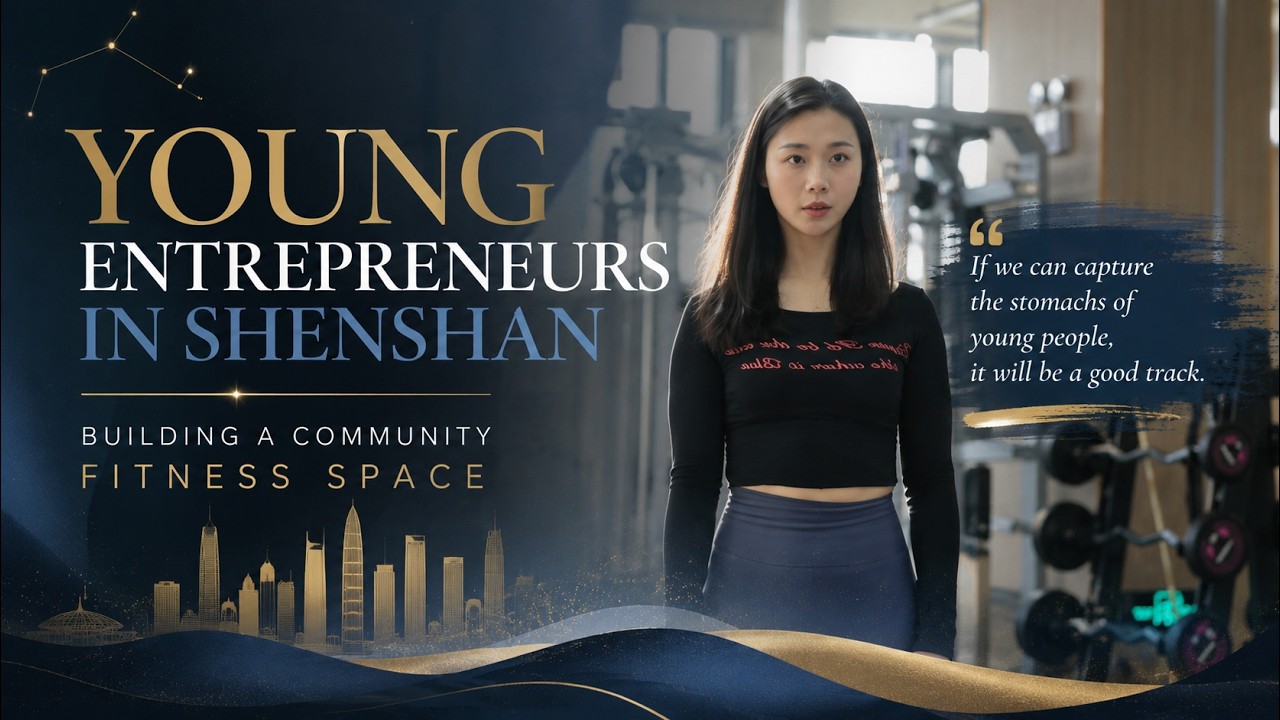
An episode of Young Entrepreneurs in Shenshan, a series about people starting small businesses in the Shenzhen-Shenshan Special Cooperation Zone. This one follows a young man who opened a fitness studio in a town that, a few years earlier, would not have supported one.
The question I followed was not whether the business would survive. It was what it means for a place when people start spending money on their own health.
Multimedia journalist and producer. I found the story myself, approached the founder, ran the interview, shot on location, cut the edit, and saw it through publishing.
Story discovery → relationship building with subject → field reporting → video production → narrative development → publication and distribution.
A short documentary about one person's decision, and about a town changing faster than the people in it.
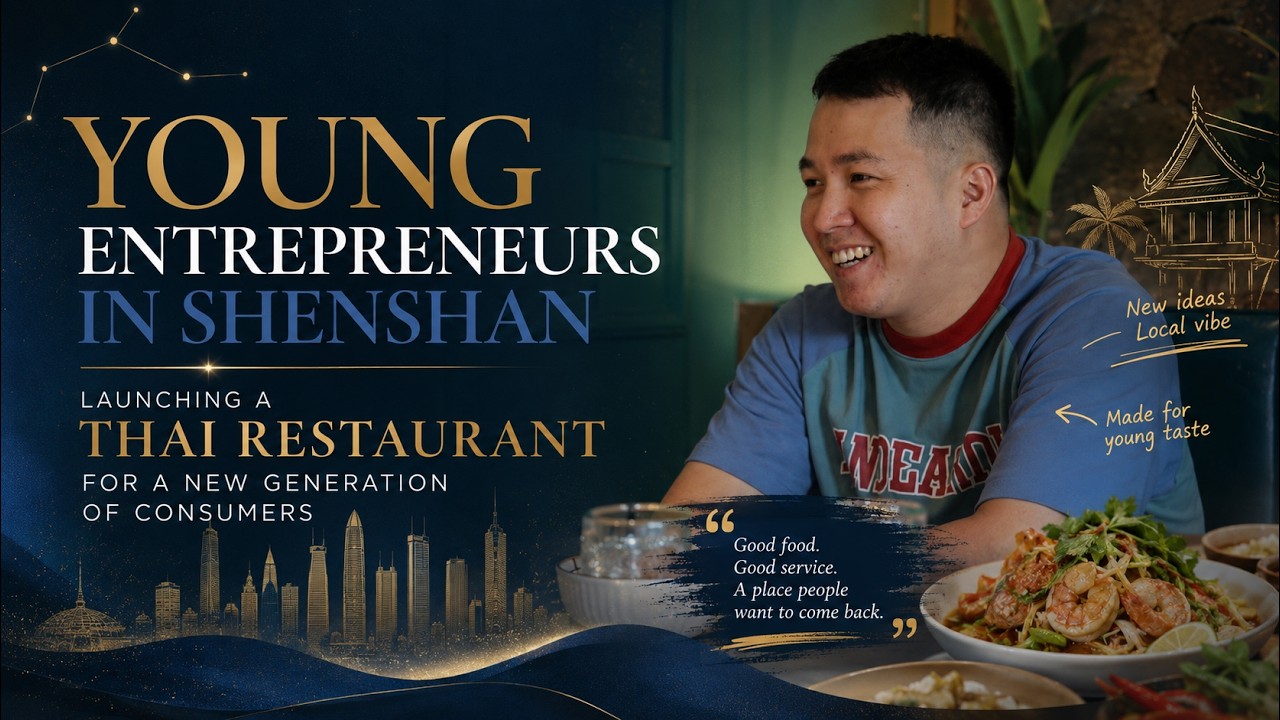
Another episode of Young Entrepreneurs in Shenshan. A 29-year-old opens a Thai restaurant in a district where the customers get younger every year, and bets the whole menu on that.
What I wanted on camera was the calculation behind the menu: who he expected to walk in, and what he thought they would order.
Multimedia journalist and producer. I found the story, contacted the owner, interviewed him, shot on location, and worked through the edit and release.
Research and story development → entrepreneur outreach → field reporting and filming → editorial production → publication and distribution.
A short documentary about a restaurant, and about a district working out who it is going to serve.
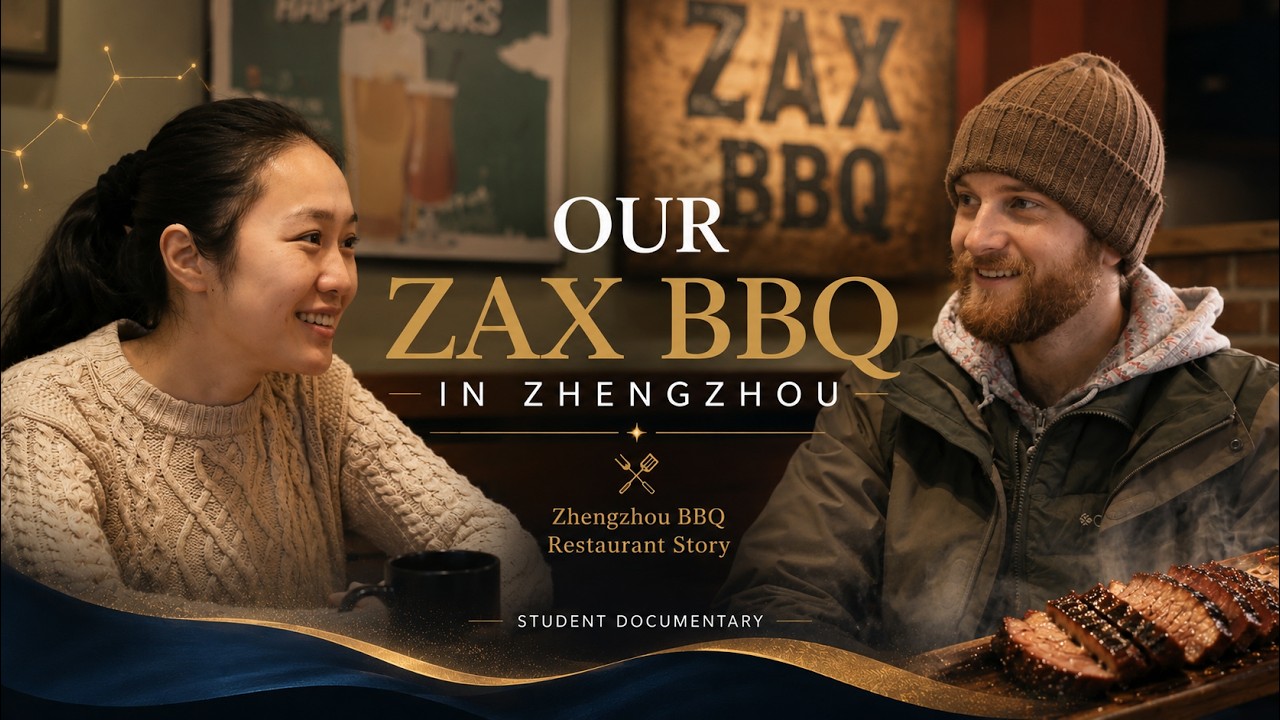
An American came to Zhengzhou to study, met the woman he would marry, and stayed. They opened a BBQ restaurant together. The film is about what it took to build a life there.
I interviewed them separately and together. The restaurant turned out to be the least interesting part. What held the film was the ordinary daily negotiation between two people from different places, which happens long before anyone calls it cultural adaptation.
Lead interviewer and editor on a student production team. I did the background research, wrote the questions, ran the interviews, helped shoot, and cut the film.
Background research → interview planning → multi-session filming → collaborative production → editing and colour grading → final delivery.
My first film start to finish. It taught me most of what I know about interviewing someone in their second language, and about how long you have to wait before a person says the true thing.
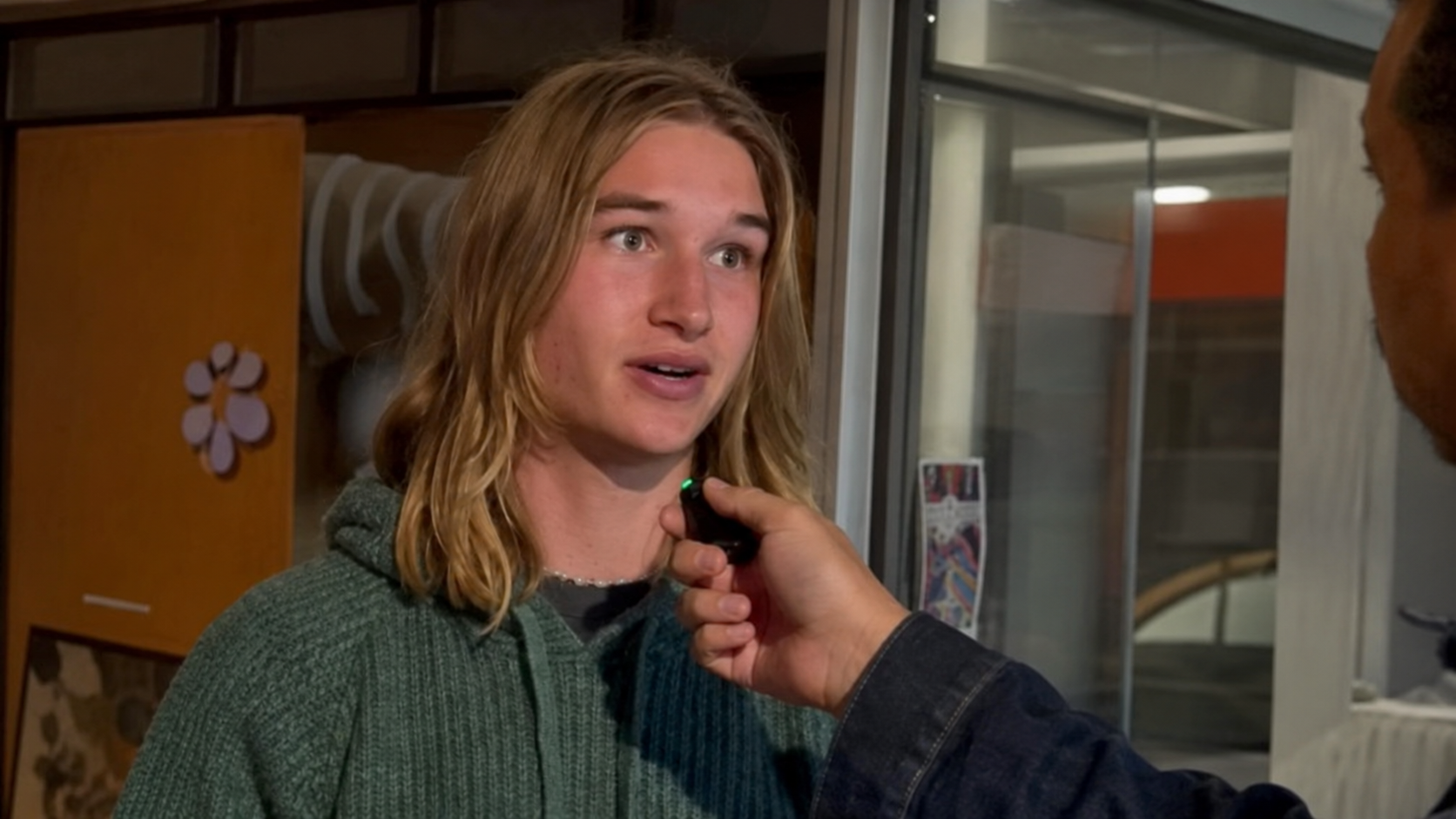
Part of Shenzhen Economic Daily's coverage of the 2023 Asia-Oceania Formula Kite Championship and Asia-Oceania Kiteboard Open.
Five days on the water. I interviewed riders between heats, filed reports, and cut short video for the paper's channels.
Most of the interviews were in English, with athletes who had just come off the water and had about ninety seconds to spare. It is the fastest I have ever had to decide what a story was.


Original videos remain the property of Shenzhen Economic Daily and are not republished here. Selected screenshots are included for portfolio purposes only.
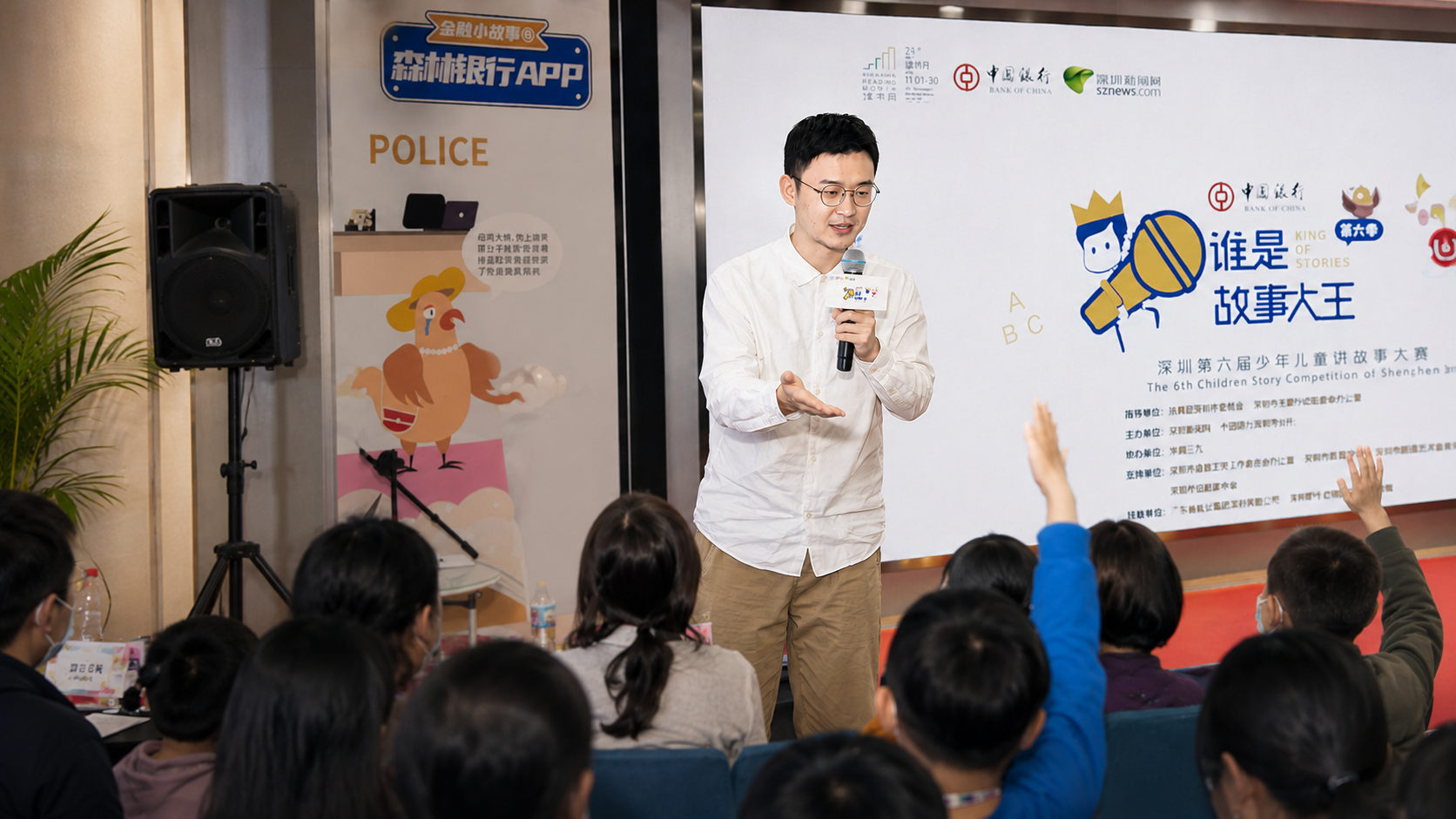
Part of the communication campaign for "Who is the Story King", a large-scale storytelling competition for children and families in Shenzhen.
I wrote the promotional material, the updates during the run, and the practical information families needed in order to sign up.
Writing for a parent deciding whether to sign their kid up is a different job from writing news. You get about one sentence before they close the tab.


Content was originally produced as part of Shenzhen News Network's coverage and promotion of the competition. Selected materials are presented here for portfolio purposes.
A short film about the week spring actually arrives: rapeseed fields, bees, and the particular light you only get for a few days.
No interviews, no voiceover. The edit carries it or it doesn't.
I wanted to know whether I could hold someone's attention without anybody speaking.
Xiaoman, or Lesser Fullness, is one of the twenty-four Chinese solar terms. It marks the point when the grain has filled out but is not yet ripe. I shot the week it fell on.
The problem was making a farming calendar mean something to people who have never farmed.
Drone work, mostly. The test was whether an idea that old could survive being cut to the length of a social post.